Influencer Partnership Risks: Protect Your Brand Reputation | PR Shield
When brand deals go sideways, who actually pays for it?
Years ago, Cyndee Harrison bought a Nespresso machine. Her husband joked that she'd been influenced by the fact that George Clooney was the brand's spokesperson. He was probably right. But that's nothing new — brands partnering with recognizable faces to sell products has been around for decades. Patrick Mahomes sells insurance. Serena Williams sells GLP-1 medications. Timothée Chalamet sells perfume.
Whenever a celebrity fronts a big advertising campaign, there's a whole apparatus behind that deal: media training, legal review, and almost certainly a crisis plan that anticipates the pitfalls and sketches out what happens if things go sideways. There's a team whose job isn't just to ask "what if this goes wrong" —it's also to prepare for everything going right, and for new opportunities that come out of the relationship. That's how brand partnerships are supposed to work: promoting and protecting both the company's reputation and the influencer's. The bigger the face, the bigger the safety net woven beneath it.
That's how brand endorsements once worked.
Influencer marketing scaled faster than anyone built guardrails for it
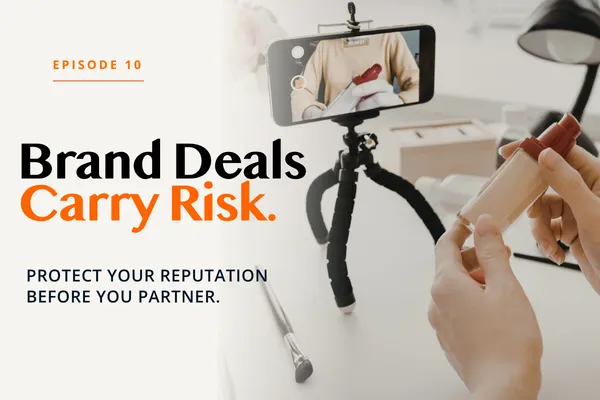
Brand partnerships have always had built-in guardrails that promote and protect both the company and the celebrity. Then influencer marketing showed up, and it scaled faster than anyone could build guardrails for this unique kind of advertising. It's now a $32.55 billion industry, according to Influencer Marketing Hub's 2025 benchmark report — and most of it runs without a seatbelt, fueled by little more than follower counts.
Too many brands hand their reputation over to people they've never trained, vetted, or prepared — and it serves no one well. There's no shortage of people rushing to make money online and hungry for brand deals, and no shortage of brands eager to get into the space. So they end up flying blind into agreements with zero media coaching, no crisis-readiness expectations, and no plan for the day something blows up — or just goes sideways.
Smaller brands are especially susceptible. They typically don't have access to the teams that specialize in this kind of negotiation, so they're more likely to partner with influencers who are newer and unproven — and whose next gig might run directly opposite to the brand's values. But thanks to the agreement already signed, the two brands are intertwined.
Even big organizations can misstep — a Michigan case study
It's not just small businesses at risk. In July 2026, The Detroit News reported that the Michigan Economic Development Corporation had paid more than $500,000 to 54 social media influencers since fiscal year 2024, through contracts tied to the Pure Michigan tourism campaign and the state's talent-attraction efforts.
By most accounts, the influencers involved followed FTC disclosure guidelines and did what was asked of them. But the campaign still became a story questioning the judgment of the whole endeavor — and the influencers' names still appear in headlines asking why they took state funds. Doing things "right," by the book, wasn't enough to prevent the reputational spotlight.
What each side of a brand deal actually risks
So why should you care about any of this? Because whether you manage a brand — for business or as a personal brand — or you're a creator chasing partnerships, or you're simply the consumer on the other end of the feed, this touches you. There are three sides to every partnership, and each one is exposed differently.
If you're the creator chasing brand deals: when a partnership goes wrong, you don't just absorb the immediate damage. You get pulled into a story you never wrote, and it follows you into the next pitch — and the one after that. Your reputation is your asset. Guard it like one.
If you're the brand weighing a partnership: understand the other side of that coin. The moment you hand a creator your name and logo, their judgment becomes your judgment. If they post something careless, fumble a disclosure, or melt down in a comment section a month from now, it's your logo sitting right next to it. You don't just inherit their reach — you inherit their risk. "We didn't know they were going to do that" has never once unrung the bell.
If you're the audience— the person being advertised to —you're the one everybody forgets, even though you're central to the whole thing. When Clooney sold Nespresso, there was never a question about whether he was being paid to do it; it was clearly an advertisement, not a casual recommendation. Audiences aren't just a follower count. When people join a creator's community, they hand that creator their trust — and trust is the entire reason brands pay for the partnership in the first place. Credibility is currency. When a partnership hides the ball or turns out to be something other than it seemed, the consumer feels played. And a consumer who feels played doesn't just drop one brand or one campaign — they start doubting all of it, and they tell people about it.
The creator's reach only means something if people believe them. The brand's name only means something if people trust it. The moment an audience stops believing what it sees, everyone is holding something worth less than they thought — and nobody wins.
The good news: this is learnable
This is the whole reason reputation work exists: visibility without protection is just exposure. The good news is that the old apparatus — the training, the vetting, the crisis planning —isn't reserved for Clooney-sized budgets anymore. These are buildable, coachable, teachable skills, available to businesses of any size. Creators can walk into a brand deal feeling ready. Brands can stop gambling on personalities and start working with people who understand the stakes.
Your one action step
Before your next brand deal — whichever side of the table you're on — ask the question that's easy to skip when everyone's excited about the partnership: what's our plan if this goes sideways? If there isn't a clear answer, that's the work to do before signing, not after something goes wrong.
Want help building that readiness into your own brand or creator strategy? Join the free PR Shield community and get on the list for the next Reputation Readiness Certification cohort.
Because credibility is currency, and it's worth protecting before you need to.
Join free at skool.com/prshield.