Crisis Communications: Prepare for Real Threats | PR Shield
Most business owners are preparing for a crisis that will probably never happen — and completely unprepared for the five that almost certainly will.
You know that feeling.
You pick up your phone first thing in the morning — still half asleep, maybe still reaching for the coffee — and there it is. A notification. And in the three seconds it takes you to read it, everything changes.
Maybe it’s a Google alert with your business name. Maybe it’s a screenshot someone texted you. Maybe it’s a one-star review sitting at the top of your listing. Maybe it’s something someone posted in a local Facebook group at 11 pm while you were asleep.
That’s not a news cycle. That’s a notification cycle. And it doesn’t care what time it is, what day it is, or whether you have a plan.
The Crisis You’re Preparing For Isn’t the One You’ll Face
For most of my career, crisis communications was taught the way it had always been taught — in the context of the C-suite: Executive scandals, product recalls, natural disasters, national headlines.
And those crises are real. But for most founders, creators, and small business owners? The crisis you’re more likely to face looks like this:
A customer leaves a one-star review, and it sits at the top of your Google listing for six months.
Someone posts about a bad experience in a neighborhood Facebook group, and seventeen people reply before you even know it happened.
A former employee says something on social media. A competitor leaves a fake review. A local reporter decides your industry is the story of the week.
None of those makes national headlines. But every single one of them can cost you customers, damage your reputation, and, if you’re not prepared, spiral into something much bigger than it needed to be.
That is a crisis. A real one. And it’s not a matter of if. It’s a matter of when.
The Five Modern Triggers
Here are the five most common ways a reputation crisis starts for small businesses, creators, and founders today. Read through them and ask yourself honestly — do you have a plan for each one?
1. The Smartphone Ambush
Someone records you, your team, or your business without warning and posts it before you know it happened. No context. No heads up. No chance to respond before it’s already spreading.
2. The Safety Panic
A real or perceived safety concern about your business. It doesn’t have to be true to be damaging. It just has to spread fast enough for the story to outpace the facts.
3. The Weaponized Review
A one-star Google review, whether it's fake, retaliatory, or from a genuinely unhappy customer, lives permanently at the top of your search results. The first thing every potential customer sees. Quietly costing you business every single day.
4. The Neighborhood Pile-On
A growing problem is reputational damage in places like Local Facebook groups, Reddit, or Community forums. Someone posts something negative and the community piles on before you even know it happened. In spaces you may not even be monitoring.
5. The Irate and Irrational Customer
This person has always existed. The difference now is they have a megaphone. And they know exactly how to use it.
The Step Nobody Takes
There’s a framework behind everything I teach at PR Shield®. And the first step in that framework is called Anticipate.
Anticipating brand risk means asking — before anything goes wrong — how could this go wrong? What are the vulnerabilities you haven’t talked about? What does your business look like to someone who wants to find fault with it?
It’s uncomfortable. It requires you to think like a critic instead of a founder. And it’s the single most powerful thing you can do to protect what you’ve built.
“How could this land wrong?” Ask it before you post. Before you promote. Before you open your doors to a reporter. Ask it out loud, in a room with people who will tell you the truth.
The Question That Will Tell You Everything
Here’s the one question I want you to sit with after reading this:
If one of those five triggers landed on your doorstep tomorrow morning, what would you do in the first hour?
Not eventually. In the first hour. Do you have a response template saved? Do you know who on your team is responsible for handling it? Do you have a monitoring system that would even tell you it happened?
If the answer to any of those is no —that’s not a crisis. That’s an opportunity. Because you can fix it right now, before anything goes wrong.
What to Do Right Now
Download the Crisis Spectrum Checklist. It’s free inside the PR Shield® community. Three sections, fifteen questions, ten minutes. Your readiness audit before you need one.
Identify your top trigger. Which of the five is most likely to land on your doorstep? Start your Anticipate work there.
Ask the question out loud. In a real conversation with someone who knows your business. “How could this land wrong?” See what comes up.
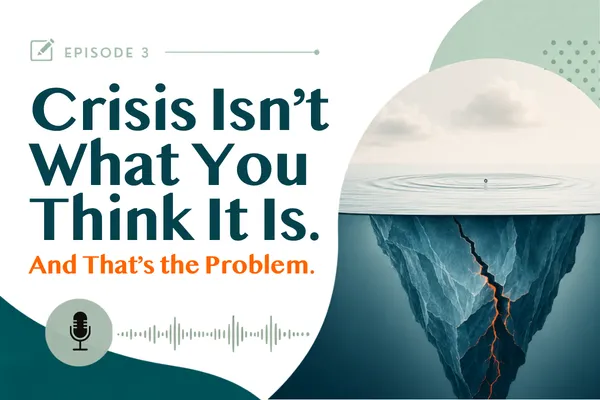
Listen to Episode 3 of Publicist in Your Pocket on Spotify, YouTube, or wherever you listen.
The Crisis Spectrum Checklist, the companion ebook — The Crisis That Never Happened: The PR Shield® Guide to Anticipating Brand Risk — and the full expanded show notes are all inside the PR Shield® communities--whether that's your organization's private learning portal or our Skool Community at https://www.skool.com/prshield!
“ believe every guru who tells you to grow your visibility owes you the other half of that conversation — what happens when it works? What happens when your visibility grows, and you aren’t prepared for the vulnerability it creates — or the opportunities it brings? But nobody is talking about that. So I am.